Venice’s policy of concealing the cholera outbreak
Death in VeniceVenice’s policy of concealing the cholera outbreak is a deliberate campaign of silence and denial that puts the city’s reputation and tourist economy ahead of informing visitors about a grave public-health danger. The novel reveals the policy incrementally: departing guests and disinfectant first prompt suspicion; evasive explanations and contradictory newspapers deepen it; and a British clerk finally discloses the outbreak’s scale and the authorities’ commercial motives. The resulting secrecy is not merely a backdrop to Gustav von Aschenbach’s stay. It becomes part of the moral and narrative disorder of the city, and an opportunity he knowingly uses to protect his private pursuit of Tadzio.
Early Signs and Euphemistic Warnings
During Aschenbach’s fourth week at the Lido, he notices that the hotel’s guest numbers are declining rather than rising and that German voices have largely disappeared from the table and beach. A barber inadvertently connects the departures to the plague, then falls silent and tries to change the subject when Aschenbach asks what he means. The exchange makes concealment perceptible before it makes the facts clear: knowledge circulates in hints, while those who might explain it avoid doing so.
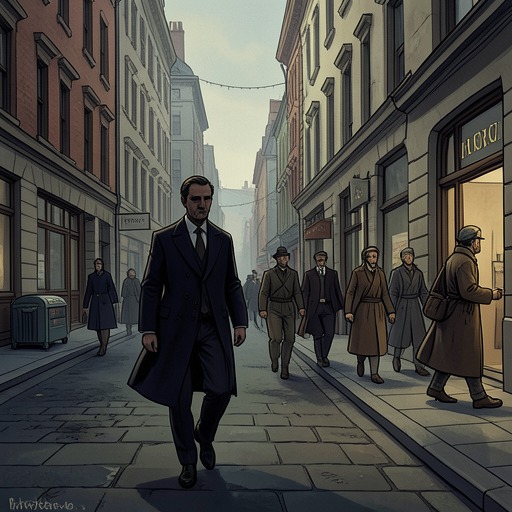
That afternoon, Aschenbach goes to Venice and encounters another set of indirect signals. In Piazza San Marco he notices a sweetish, medicinal odor that seems to suggest illness, then finds municipal posters warning about seasonal gastric complaints, oysters and clams, and canal water. Their euphemistic wording does not name the danger he suspects. When he asks a shopkeeper about the odor, the man presents disinfection as a police precaution against oppressive weather and the sirocco, minimizing its significance rather than explaining it. Aschenbach also detects the disinfectant smell on the steamer back to the Lido, making the official reassurance harder to reconcile with what he has observed.
Denial, Rumor, and Commercial Interests
The hotel’s newspapers offer no straightforward account. Foreign-language papers say nothing; the domestic press reports rumors and hazy statistics, then repeats official denials or casts doubt on the reports. This patchwork explains to Aschenbach why German and Austrian guests have left while visitors of other nationalities remain apparently unsuspecting. His angry reaction to the effort to keep the outbreak quiet is accompanied by a less honorable response: he feels satisfaction at the disorder spreading around him, because it seems to create an opening for his passion.
Seeking firmer information, Aschenbach later searches local papers in Venice’s cafés after newspapers disappear from the hotel reading table. Reports give widely varying estimates—twenty, forty, or even a hundred or more sick and dead—only for the cases to be denied or described as isolated infections from outside. Notices and protests appear alongside denials, so the available information is not simply absent but actively contradictory. Aschenbach takes a grotesque satisfaction in questioning people who know more and compelling them to lie under their obligation to keep quiet. At breakfast, he asks the hotel manager why disinfectants are so common. The manager attributes them to police regulations intended to prevent health problems arising from unusually hot, threatening weather, preserving the pattern of reassurance without disclosure.
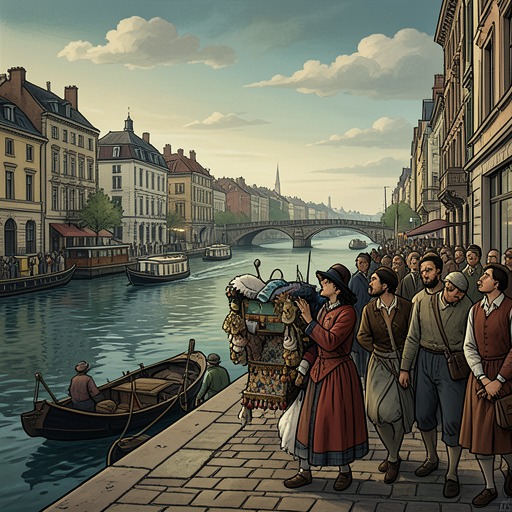
The decisive explanation comes from a British clerk at the English travelling bureau in Piazza San Marco. After initially offering the familiar claim that the measures are precautionary, the clerk admits that this is only the official explanation and tells Aschenbach what lies behind it. The cholera, which has spread from India through multiple regions and Mediterranean ports, has reached Venice: the first cases were found in a cabin boy and a greengrocer, and further cases followed across several parts of the city. Reports began to reach German newspapers after a visitor returned home and died with unmistakable symptoms. In response, the authorities maintained that the city’s health conditions had never been better and took preventive measures while denying or glossing over the danger.
The explanation identifies the policy’s governing calculation. Authorities feared that panic and unfavorable rumors would damage the recently opened art exhibition, business, hotels, and the wider system built around foreign visitors. These commercial concerns outweighed, in the account given to Aschenbach, truthfulness and respect for international agreements. The chief health officer resigned in indignation and was replaced by someone more compliant. The result is presented not as an isolated misleading statement but as an institutional choice maintained through official denials, managed information, and replacement of a dissenting public-health official.
The Scale of the Outbreak and the Cost of Silence
The clerk’s account makes clear what the reassuring public language conceals. By early June, the pesthouse at the Ospedale Civico is full, the two orphan asylums have little room remaining, and transport to the burial island of San Michele is active. Premature summer heat, which warms the canal water, favors the epidemic’s spread; recovery is rare, and the reported mortality is severe. Against these facts, the authorities’ claim that public health is in good condition reads as a protection of the city’s image rather than a reliable description of risk.
The policy’s consequences extend beyond visitors’ incomplete knowledge. The account links the authorities’ corruption and the insecurity created by the prevalence of death to the demoralization of lower-class life, with increased drunkenness, unsafe streets, burglaries, and murders. It also describes a rise in professional debauchery. These details frame concealment as part of a broader civic breakdown: the public is left without a trustworthy account of danger while the conditions of fear, uncertainty, and self-interest grow more pronounced.
The British clerk warns that Aschenbach should leave immediately, before a quarantine zone is declared, which may be only days away. The warning establishes the practical stakes of the information the authorities have withheld. Aschenbach now possesses a clear account of the threat and a credible reason to depart, but disclosure has come to him privately rather than through the city’s public channels.
Aschenbach’s Complicity and the Policy’s Narrative Role
After hearing the truth, Aschenbach considers warning the woman with pearls to leave Venice with Tadzio and her daughters. He imagines telling her that Venice is full of plague and that the danger is being withheld through self-interest. Yet he recognizes that he does not truly want to carry out the warning. He decides that the information must remain secret because he fears Tadzio’s departure and feels unable to continue living without the possibility of seeing him. The city’s concealment and Aschenbach’s silence have distinct causes—the authorities protect commerce, while he protects his infatuation—but they converge in withholding danger from those who remain exposed to it.
The policy therefore acts both as a public-health failure and as a narrative instrument. Its evasions turn ordinary observations—departures, notices, disinfectants, and inconsistent reports—into clues that must be pieced together, delaying certainty until the clerk’s disclosure. That delay parallels Aschenbach’s own divided response: he recognizes the facts and even imagines the responsible action, yet refuses to act on what he knows. As the authorities preserve the appearance of safety for the sake of business, Aschenbach preserves his access to Tadzio at the cost of another family’s informed choice. The city’s silence does not create his obsession, but it gives that obsession a concealed and dangerous shelter.